SEC chair calls on IFRS to prioritise accounting standards over ISSB
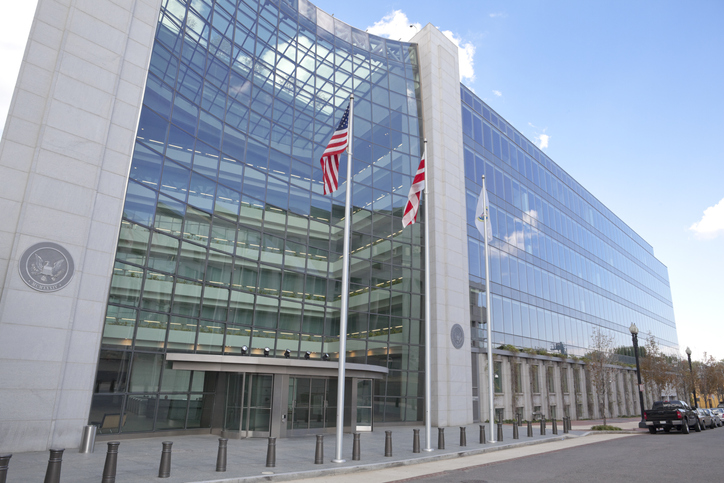
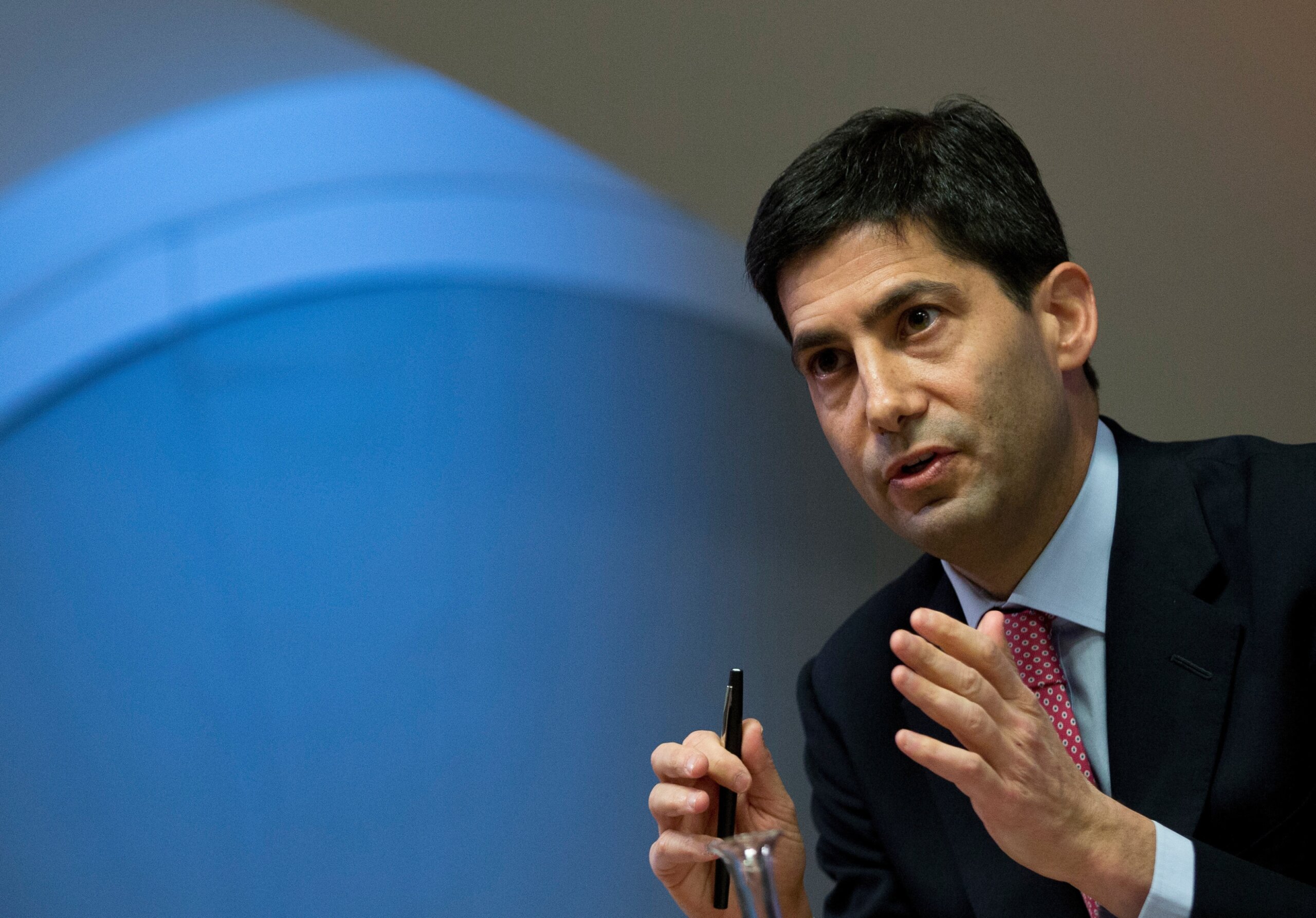
US Securities and Exchange Commission (SEC) chair Paul Atkins has called on the IFRS Foundation to prioritise its focus and funding on the International Accounting Standards Board (IASB) over the International Sustainability Standards Board (ISSB).
The comments were made by Atkins in a speech at the OECD Roundtable on Global Financial Markets in Paris on Wednesday.
In his remarks, Atkins said that the “recent expansion” of the foundation’s remit and work of the ISSB cannot divert its focus from its “long-standing core responsibility” of funding the IASB.
Atkins encouraged the foundation to meet its goal for “stable funding” that prioritises the IASB – which is responsible for developing and approving IFRS standards – and its focus on standards for financial accounting, “rather than specious and speculative issues”.
If IASB does not receive full, stable funding, Atkins claimed that “one of the underlying premises” for the SEC ruling in 2007 that it would accept financial statements by foreign companies prepared in accordance with IFRS standards without reconciliation to Generally Accepted Accounting Principles (GAAP), “may no longer be valid”.
“We may need to engage in a retrospective review of that decision.”
The IFRS is in the process of reviewing the ISSB’s funding model, as the seed capital – established in 2022 for the board’s launch – will end next year, but Responsible Investor understands that no decisions have been made yet.
In its annual report in April, the IFRS Foundation said that despite growth in philanthropic contributions and corporate income, it did not meet its revenue targets.
“Income from jurisdictions and companies to support the ISSB’s programme of standard-setting and related activities fell short of expectations, particularly in Europe,” it said.
Atkins also said the IASB must promote high-quality accounting standards that are focused solely on driving reliable financial reporting “and are not used as a backdoor to achieve political or social agendas”.
“Reliable financial reporting is critical to supporting capital allocation decisions. We all have a strong interest in the IASB’s being fully funded and operational,” he added.
In May, the SEC withdrew from the IFRS Sustainability Jurisdictional Working Group, as well as giving up its observer status of the Sustainability Standards Advisory Forum.
The first group aims to enhance compatibility between the ISSB and ongoing jurisdictional efforts on sustainability disclosures, while the advisory forum has been established to support the IFRS Foundation and ISSB in its objectives, formalise engagement with relevant jurisdictional and regional bodies, and facilitate technical discussions on standard-setting issues.
At the time, an SEC spokesperson told RI this was done “consistent with the policy direction of new SEC leadership”.
Republican SEC Commissioners Mark Uyeda and Hester Pierce have also previously raised concerns about the ISSB, including suggesting that it could take focus away from the IASB.
In response to Atkins’ comments, an IFRS Foundation spokesperson said the SEC is an important stakeholder, and the foundation continues to maintain close dialogue with its leadership and staff.
“The IFRS Foundation was created over two decades ago to enable the disclosure of financially material information for the capital markets and remains focused on this task.”
The spokesperson added that the IASB and the ISSB operate and are funded independently, “while their respective standards do not impose requirements on each other”.
“The IFRS Foundation is midway through a two-year transformation programme to ensure we are efficient and effective in delivering for capital markets, including the development of our long-term funding strategy.”
EU regime criticised
During his speech, Atkins also took aim at the EU’s Corporate Sustainability Reporting Directive (CSRD) and the Corporate Sustainability Due Diligence Directive (CSDDD) and their promotion of double materiality.
The SEC chair said he had “significant concerns” over the “prescriptive nature” of these laws and their burdens on US companies, the costs of which are potentially passed onto American investors and customers.
The directives are in the process of being simplified via the EU’s Omnibus simplification initiative, and have faced heavy scrutiny from the US.
In March, Tennessee senator Bill Hagerty introduced a bill that would stop US companies from complying with any foreign sustainability due diligence regulation, including the CSDDD.
The CSDDD has also faced criticism by both the Trump and Biden administrations, and the Commission has said it will “exchange views” with the US on its due diligence rules.
Meanwhile, 21 state officials in July letter called on asset managers to commit to “abstain from embedding international political agendas” such as the CSRD “into default investment strategies and corporate engagement”.
Atkins said that while he is encouraged by the EU’s commitment to ensure they do not pose undue restrictions on transatlantic trade, as well as efforts to streamline and simplify these laws, “further work remains to refocus regulatory regimes on the principle of financial, instead of double, materiality.”
US investors have pushed for the EU to align its sustainability reporting standards with the ISSB.
Atkins added that the EU should focus on reducing unnecessary reporting burdens on issuers rather than pursuing “ends that are unrelated to the economic success of companies and to the wellbeing of their shareholders”, as it seeks to promote its capital markets.
link