


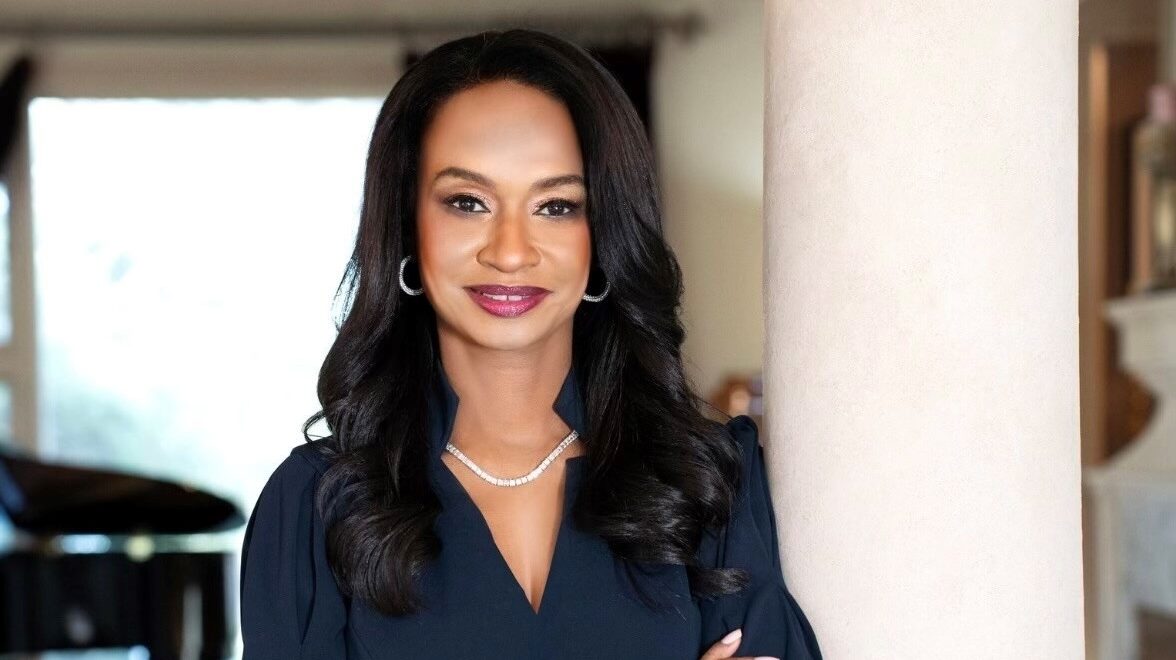
As U.S. Head of Wealth, Premier & Private Banking at HSBC, Racquel Oden oversees the Bank’s U.S. wealth and global private banking. She credits much of her success to the diverse experiences that have shaped the foundation of her career.
With previous leadership roles at JPMorgan Chase, Merrill Lynch, UBS, and Morgan Stanley, Oden has spent her career breaking new ground in a space not known for rapid transformation or inclusivity. The daughter of Jamaican immigrants and a first-generation wealth builder herself, she’s acutely aware of both the power and the limitations of legacy institutions. Her ability to anticipate how clients must plan for tomorrow is what sets her apart. From embracing AI-driven trends to understanding how younger generations consume financial information, her work now is about leveraging that legacy to serve a new generation: globally connected, digitally native, and hungry for transparency, education, and impact.



Always looking ahead, Oden sees financial literacy not just as a tool, but as a space ripe for transformation. “Meeting clients where they are” means rethinking the role of the banker, especially as wealth planning becomes a baton pass—to the next generation, to digital-first platforms, and importantly, to more women.
Crouse: You’ve had one of the most impressive careers I’ve seen—moving between major corporations and leaving a mark at each. When did you first realize finance could be a platform not just for wealth creation, but also for expanding access and opportunity?
Oden: That was clear to me from the moment I entered Wall Street. My personal story shaped that belief. I’ve always felt that Main Street should be part of Wall Street—that was the original intent behind building financial markets. Whether in investment banking or wealth management, I’ve always viewed education and access as central to the job. I’m a first-generation wealth builder myself, so I deeply understand the importance of creating wealth not just for yourself but for future generations.
What forces do you see shaping the financial services industry right now, and how are you preparing your teams to meet those challenges?
The biggest transformation across all industries—ours included—is AI. Everyone’s trying to figure out how to use it effectively and where the risks and benefits lie. It feels like the early dot-com era again: lots of players, lots of experimentation. Back then, we didn’t know which internet companies would survive; now we’re in a similar phase with AI. Financial services are no exception. Every company needs a clear perspective on what AI means for their business—how it can accelerate growth, drive innovation, and ensure relevance in the next five years.
How do you define success for yourself, personally?
I’ve always looked at each chapter of my career through the lens of growth. At every organization—whether investment banking, asset management, wealth management, consumer retail at JPMorgan, or now a global role at HSBC—I asked myself: Will this next role expand my perspective and skill set? If the answer was yes, I moved forward. If not, I passed. For me, success has always been about becoming more well-rounded—building the experiences that make me a stronger, more thoughtful leader.
So, constant growth is your compass.
Exactly. Some people call that risk—I see it as growth. Moving to a different business line or learning something new isn’t risky, it’s an opportunity to evolve. Every new role builds on what came before.
Sounds like that requires a pretty serious learning mindset, too.
Absolutely. I’ve always been a sponge. I studied political science, then got my MBA in finance—but beyond school, I’ve stayed in learning mode my entire career. Whether it’s podcasts, emerging FinTech trends, or new ideas from younger generations, I make a point to stay plugged in. Early in my career, I pivoted from investment banking to wealth management because I was hired to run internet strategy during the dot-com boom. I always tell people: focus on where the puck is going. Back then, it was the internet. Now? It’s AI. You need to position yourself where innovation is headed.
Are there any podcasts you’re especially into right now?
I don’t stick to just one. I focus on where most people, especially the next generation, are actually getting their financial information. Statistically, it’s podcasts, Instagram, and TikTok. So I make it a point to track what’s trending there. As an industry, we have to understand what people are hearing and how that shapes their financial mindset. That’s our responsibility—to meet people where they are and ensure they’re getting sound, credible advice.
You’ve navigated some of the most competitive corporate environments in the U.S. What have you learned from failures or friction that’s shaped your leadership style?
A lot. I’ve learned just as much from failures as from successes. One mindset I’ve adopted is what I call “test and learn.” I create environments where people feel safe experimenting, without the pressure of perfection. Failure can be paralyzing, but if you frame it as a test—something you learn from and iterate on—it becomes a tool for innovation.
I’ve worked in places where failure wasn’t acceptable, and it stifled progress. But look at tech: the best leaders fail fast, learn, and keep going. That’s not always the case in financial services. I believe we can—and should—borrow that mindset.
There’s a great book called Unreasonable Hospitality that captures a lot of this. It’s about obsessing over the customer experience in the same way Michelin-star restaurants do. I’ve lived my whole career focused on individual investors. Every detail matters when it comes to improving the client experience.
So, being client-obsessed is the key?
Exactly. Any decision you make should begin and end with the client in mind—not just their needs today, but where they’re headed. Part of our job is anticipating what clients will need five or ten years from now. That forward-looking perspective drives real innovation and long-term relevance.
There’s a lot of disruption in the world right now. At Worth, our motto is “Worth Beyond Wealth,” which to us means helping our audience use their money, power, and influence to make the world better. From where you sit, what role can financial institutions play in driving social equity, whether it’s closing racial wealth gaps, advancing gender equity, or supporting environmental goals?
One of the biggest gaps we face is financial literacy. We don’t teach it in schools, so most people just pick it up by chance. That’s why platforms like TikTok and Instagram become so powerful—they’re often the first exposure people have to financial concepts. As banks, we have a responsibility to meet that need—to educate the communities we serve and make financial knowledge more accessible.
Another massive shift we’re preparing for is the largest wealth transfer in history—and it’s going to women. By 2030, trillions of dollars will be in the hands of women. That’s where the puck is going. So we need to ensure women feel confident, informed, and prepared.
The good news is we’re already seeing progress. About 60% of women today are invested in the markets—a huge increase from previous generations. Among Gen Z, it’s even higher—around 71%. That’s extraordinary. Education and access are making a real difference. And yes, there’s misinformation online, but even surface-level exposure opens the door for deeper understanding.
Right—seeing the topic pop up in your feed makes it feel relevant, even if the details aren’t quite right. Do you think the rise of financial content on social media is ultimately a good thing?
You can’t fight consumer behavior. People are getting their information on these platforms—so we have to be there, too. That’s why we’re focused on creating strong, credible financial content on TikTok and Instagram. We’re also partnering with ambassadors and influencers to ensure we’re offering sound, fact-based guidance.
It starts with exposure. Then it’s about helping people move from surface awareness to trusted expertise. I’m especially excited about the impact this is having on women’s confidence. Women now outperform men in investment returns—but still often doubt themselves. That confidence gap is one of the biggest barriers we have to address.
We’ve done a lot of reporting on the generational wealth transfer to women. It’s fascinating how wide-reaching the effects will be. Where do you expect to see the biggest impact once that shift happens?
It’s not just about the moment the transfer happens—it’s about preparing for it. We need to ensure women are involved in conversations about wealth now, not later. That means including both partners in financial planning, having family discussions, and building trust over time.
When the transfer comes, it shouldn’t feel like a sudden obligation. It should feel like a continuation of a journey. The biggest difference we see between men and women in investing isn’t performance—it’s confidence. That’s the gap we have to close. Because once women believe in their ability to manage wealth, the results speak for themselves.
Is there a specific project or initiative you’re excited about right now?
One key area we’re focused on is helping international clients build wealth—especially in times of volatility. Right now, uncertainty is paralyzing a lot of people. Our research shows that even affluent clients are hesitant to act. But doing nothing is often the worst response in a volatile market.
So we’re working to help clients embrace uncertainty and stay engaged through active management. Diversification, sector shifts—these aren’t things to avoid; they’re tools to navigate volatility. It’s about building a plan that works even when things feel chaotic.
If you could ask Worth readers to do one thing—personally or professionally—to help build a more equitable world, what would it be?
Every one of us has a role to play. Have you done something for your community today? For your family? For the next generation? If the answer is yes, then you’re doing your part. Every action matters.
Love that. Since our motto is “Worth Beyond Wealth,” does that phrase resonate with you?
Absolutely. Worth beyond wealth is about your knowledge, your generosity, your commitment to something bigger than yourself. That’s the kind of wealth that truly matters—and the kind the world needs more of.
link